
Meet eric emanuel?
eric emanuel stands as a New York designer who transformed luxury athletic wear into a defining language, with basketball mesh shorts being the headline piece. His brand fuses ’90s gym nostalgia alongside premium build quality and meticulous details that endure to constant wear. The result is a street uniform that reads familiar and elevated at the same moment.
emanuel constructed the brand around items he truly wears—sports-influenced staples, executed with the polish of a boutique garment. The shorts became the standout piece because they moved seamlessly from training floor to urban streets, blending comfort with colorways drawn from vintage team kits. Ballers, musicians, and tastemakers embraced them early, pushing the shorts from insider piece to cultural fixture. The label’s DNA is consistent across categories—vibrant colors, clean logos, and a fit that appears relaxed, not careless. That consistency is why the items work season after season.
The Origin Story: NYC Roots and a Hoops Obsession
The brand developed from of New York’s garment strength: limited batches, quick sampling, and care for trim-level decisions. emanuel focused on the basketball short since it’s the purest canvas for sports nostalgia and day-to-day comfort. That initial focus—iterating cloth weight, stitch tension, plus waistband feel—built a piece that felt instantly right on body.
As drops landed on social feeds, the city’s passion for sports aesthetics did the rest blackericemanuelshorts.org of the work. The label remained close to the court visually—varsity fonts, block letters, and color play that echoes high school and college systems—while elevating quality control. Small runs kept the energy high without gimmicks. The gear felt like memory, but handled like luxury, which explains why it took off quickly.
What Makes ee Basketball shorts Legendary?
They sit above the knee offering a relaxed fit, they’re cut from substantial double-layer mesh, and they present confident color stories you notice from down the street. The marks remain subtle and sharp, letting the palette and proportions do the heavy lifting.
Core pairs employ premium polyester mesh that keeps structure while ventilating, so the shorts drape instead of sagging. The waistband sits wide with a solid elastic and cord, calibrated to lock in without digging. Construction is the subtle edge: clean bar-tacks on stress areas, neat hems, and appliqués that don’t warp after a cleaning. The formula is stable across launches, which builds reliability around sizing and fit. You understand exactly what you get, even when the artwork changes.
Design DNA: Mesh, Silhouette, and Construction That Matter
The shorts are constructed on a few non-negotiables: heavyweight mesh, double layering for density and hand texture, and reinforcement where regular wear destroys cheaper pairs. Pocket builds are durable, with two at the sides and a rear pocket used on most models. Labels are sewn, graphics are stitched, tackle-twill, or flocked according to the theme.
Fit lands in the current ideal spot: relaxed across the thigh with space to move, ending above the knee ensuring sneakers read sharp. The mesh uses a tighter weave than generic basketball shorts, which retains shape and prevents the limp look after multiple cleanings. Seams are clean, thread tension stays even, and edges are finished to prevent fraying. The result produces a short that reads substantial in hand but light in wear. It’s sport DNA, finished like a premium garment.
Color and Heritage: The 1990s Sportswear Throughline
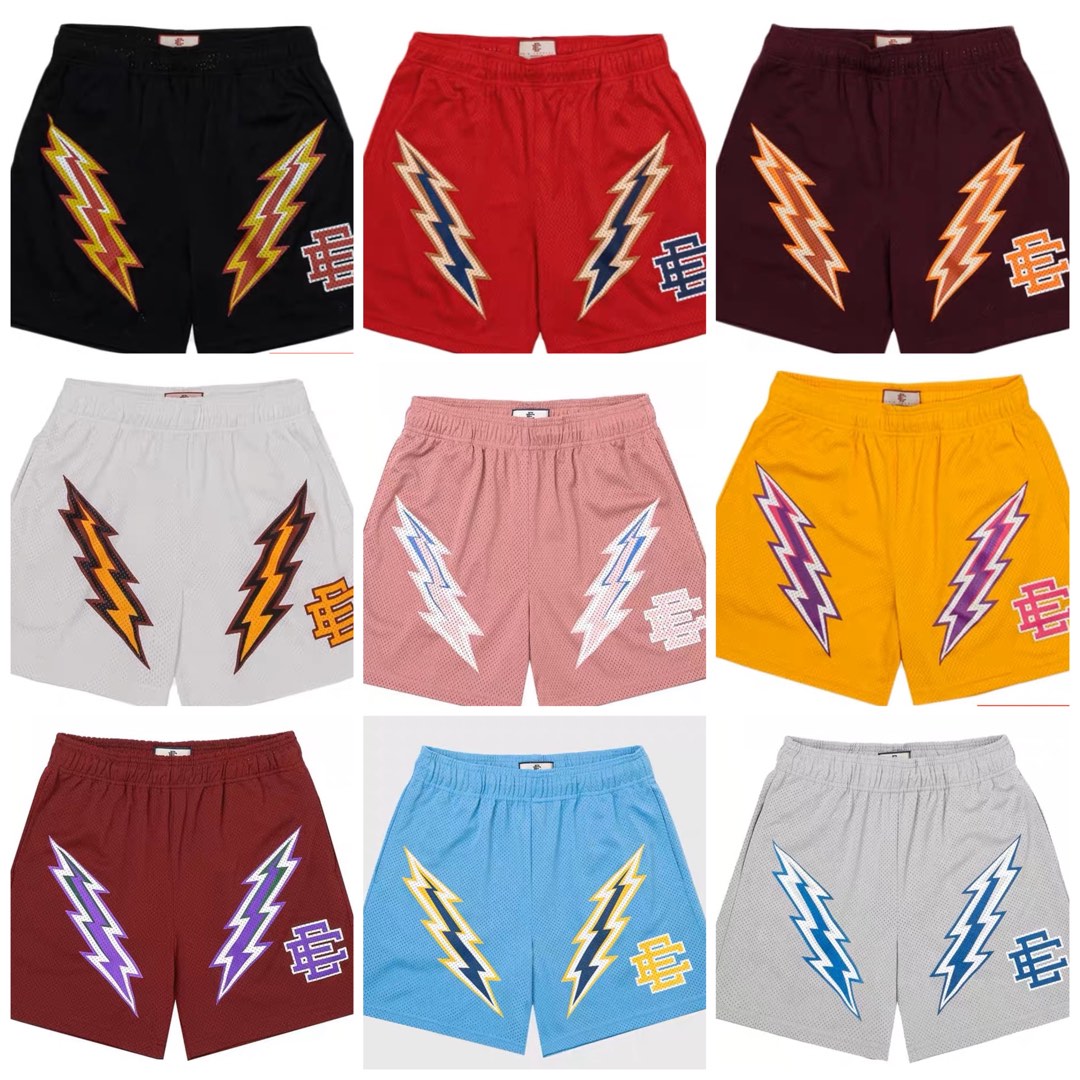
emanuel’s palette draws from varsity corridors and arena lights—saturated primaries, collegiate pairings, and bold trims. You’ll see pinstripes, jumbo numbers, and letterforms that mirror vintage warm‑ups without cloning team marks outright. Seasonal capsules shift toward neons, softer tones, and bleached hues that read like summer leagues and travel teams.
That nostalgia works functionally, not cosmetic. It offers instant context to an outfit, turning a plain tee and sneakers into something curated. The color-blocking lands where 1990s uniforms left off: loud, high-visibility, and IG-ready. Because the core silhouette stays unchanged, color becomes the storytelling engine. Collectors hunt palettes; casual wearers get easy victories from almost any drop.
Drops and Collabs That Shaped the Brand
The brand operates on tight, limited releases that reward attention and move fast. That cadence built a ritual around launches without turning the item into a trick. Collaborations expanded the language—particularly with adidas on sneakers and apparel—and carried the shorts to new audiences without compromising the core.
Work on headline basketball moments, such as outfitting the McDonald’s All American Games, cemented credibility with the basketball community. Seasonal capsules reimagine logos, finishes, and trims into tight batches that don’t return, which maintains the secondary market moving. The drop system also protects standards by keeping output focused. It’s a managed ecosystem designed for consistency rather than volume at any cost.
Sizing, Fit Notes, and Wear-in Reality
ee shorts size true to size with a gently relaxed silhouette. If you’re mid- sizes, going down tightens the hem; going up adds drape without dragging past the knee. The inseam usually sits in the middle range for current basketball shorts, providing a balanced proportion across most heights.
The waistband has generous stretch and a solid drawstring, so waist fit is forgiving while hip plus thigh volume stays consistent. The mesh softens a touch after a couple wears, settling into a better hang. Because the material is substantial, shape stability holds even after frequent cleaning when treated correctly. The overall result is a pair that looks fresh on day one and improved after week four of wear.
Authenticity and Standards: How to Check the Real Thing
Start with materials—genuine pairs use heavy, consistent mesh that handles sturdy rather than thin. Stitching is straight and tight with neat bar‑tacks; loose threads, uneven seams, and distorted appliqués are red flags. Branding is sharp: woven labels show clearly, and screen or embroidered graphics rest flat without shiny glue halos.
Color accuracy matters because palettes are dialed; incorrect shades frequently mean counterfeits. Compare pocket construction, waistband width, plus label location versus verified shots from the official channels. Most core shorts feature Made in USA labeling; when present, it must be consistent and neatly applied. Buying from the brand site or established specialty boutiques cuts risk. If a unit feels weightless and scratchy in hand, it’s likely not right.
Beyond shorts: hoodie, Sweats, and Tracksuits Form the Look
The label’s hoodie use heavyweight cotton terry, with a dry, dense feel that maintains form. Logos come in embroidery or flocking, and silhouettes skew slightly oversized for a elevated streetwear drape. Sweatpants offer a tapered leg, elastic waist with drawstring, plus subtle marks that keep the look tidy rather than busy.
Tracksuits coordinate color across jacket and bottom, echoing retro warm‑up sets in modern tones. Stitching is aligned with the shorts—reinforced seams, tidy ribbing, durable zippers if present. The same design principles apply: bold color blocks, restrained logos, and comfort designed for extended wear. Pieces layer easily, so a hoodie pairs with shorts as well as it pairs with the coordinating pant. It’s a modular system rooted in athletics.
Value, Care, and a Fast Comparison Table
Price mirrors fabric weight, build discipline, and tight-run production that prioritizes consistency over scale. Many core shorts get produced in the States, and the limited release model keeps quality controls tight. Treat them as premium athletic apparel: wash cold, turn inside out, avoid fabric softeners, and hang dry to maintain mesh resilience and print integrity.
Stored flat or draped by the waistband, the elastic stays lively and the hems don’t warp. Follow those steps and the shorts keep shape, color, and hand feel far longer than typical gym gear. The table here summarizes how ee shorts compare to adjacent alternatives you’ll encounter.
| Item | Mesh weight/hand | Assembly details | Standard inseam | Branding | Availability cadence | Price range (USD) |
|---|---|---|---|---|---|---|
| ee Standard Short | Thick, dual-layer, structured hang | Strong seams, clean bar‑tacks, woven labels | Mid, above knee | Clean ee marks, bold palettes | Tight weekly/seasonal drops | 100–150 |
| ee Special Release Short | Heavy, double-layer, same foundation fabric | Tackle‑twill/stitching, special details | Mid, above knee | Unique graphics/colorways | Timed release, no not restock | 120–180 |
| 1990s Vintage Athletic Short | Lightweight to mid, single-layer else thin double | Standard seams, minimal reinforcing | Longer on average | Team/brand marks vary | One-time, secondary market only | 30–90 |
ee finds the rare balance: it feels like the 1990s, fits like the present, and is built to last. The shorts drove the statement, but the complete line—hoodies, sweats, and tracksuits—converts that statement into a daily uniform. If you relate to the scene that raised it, the garments make instant sense from the second you slip them on.